
How Does Refrigerant Affect Air Conditioning Performance in South Florida?
How Does Refrigerant Affect AC Performance in South Florida? In South Florida, refrigerant plays one of the most critical roles in how well your air conditioning system performs. Without the correct amount of refrigerant, your AC cannot properly remove heat from your home or business—no matter how long it runs.
Why Refrigerant Matters More in Florida
Florida’s climate puts extreme demand on HVAC systems because of:
- High outdoor temperatures
- Constant humidity
- Long cooling seasons
Your AC must remove both heat and moisture from the air. Refrigerant is the substance that absorbs the heat inside your home and releases it outside.
When refrigerant levels are off, that entire process breaks down.
How Does Refrigerant Affect AC Performance in South Florida?
Refrigerant is essential to your air conditioning system because it absorbs heat from inside your home and releases it outdoors. In South Florida, where heat and humidity are high year-round, proper refrigerant levels are critical for maintaining cooling performance and efficiency.
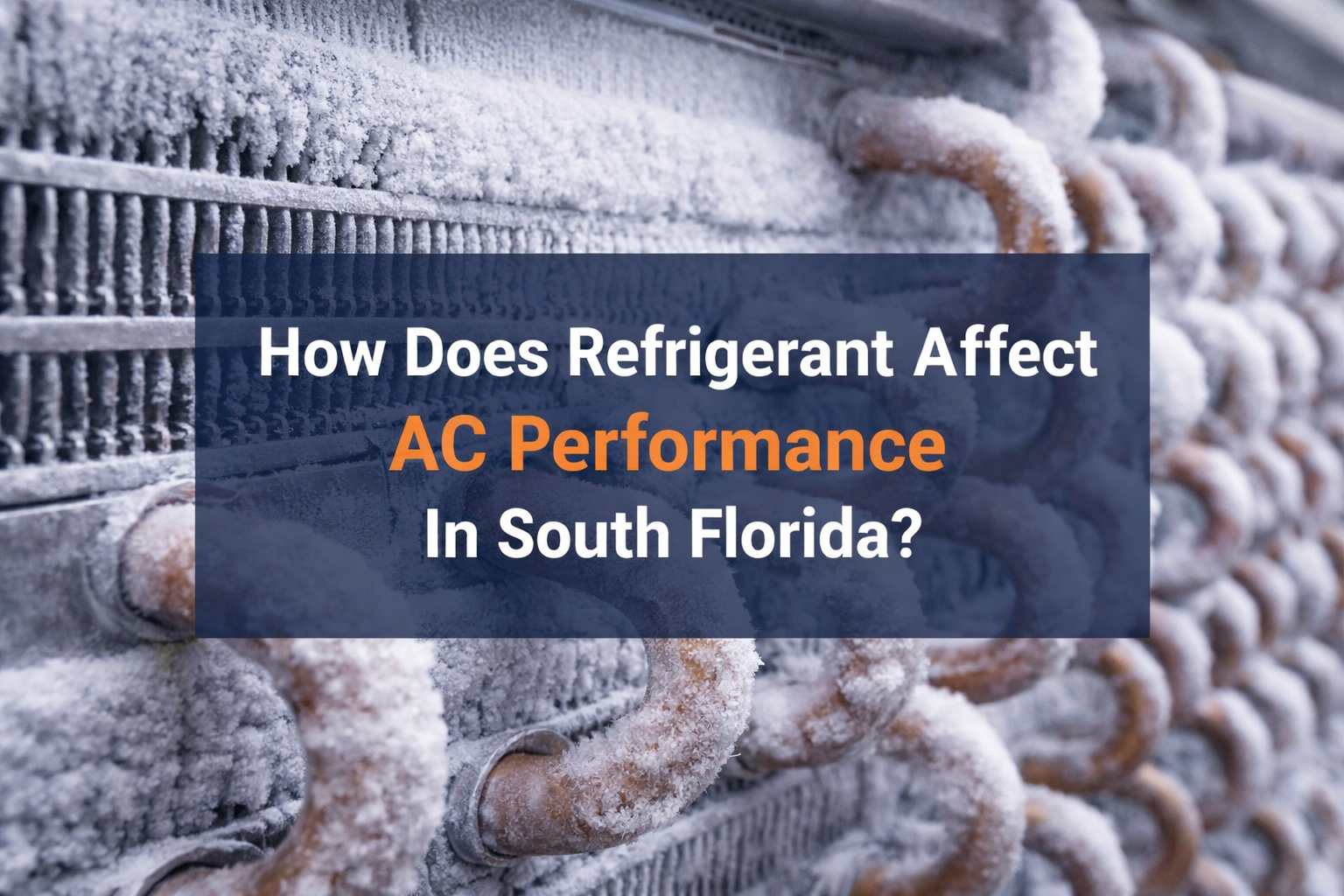
If refrigerant is low—usually due to a leak—your AC system cannot remove heat effectively. This leads to longer run times, reduced cooling, higher energy usage, and poor humidity control. Low refrigerant can also cause evaporator coils to freeze and may eventually damage the compressor.
Even a small loss of refrigerant can significantly reduce system efficiency. Studies show that a 10% drop in refrigerant can reduce performance by up to 20% or more. In Florida’s climate, this added strain can quickly lead to system failure if not addressed.
Here’s the key fact:
Refrigerant doesn’t get “used up” like fuel — it circulates in a sealed system.
So if your refrigerant is low, it almost always means there is a leak.
How Does Refrigerant Affect Air Conditioning Performance in South Florida? What Happens When Refrigerant Is Low
When refrigerant drops—even slightly—you may notice:
- Longer cooling cycles
- Warmer air from vents
- Higher energy usage
- Reduced humidity control
Over time, low refrigerant can cause:
- Evaporator coils to freeze
- Compressor damage (most expensive repair)
- Complete system failure
How much electricity does a Trane AC use?
A Trane air conditioner’s electricity use depends on its size, SEER2 rating, runtime, and outdoor temperatures. In general, higher-SEER2 Trane systems use less electricity than lower-efficiency models. Trane residential air conditioners currently range from about 13.4 SEER2 up to 23.6 SEER2, so actual energy use varies by model and matched indoor equipment.
What affects your AC energy use the most?
- System size in tons
- SEER2 efficiency rating
- Single-sta